Fact Sheet Dog Breed Boston Terrier
Species: Dog
Breed: Boston Terrier
QUEN-Fact Sheet Nr. 27-EN
Status: 10.08.2026
Species: Dog
Breed: Boston Terrier
QUEN-Fact Sheet Nr. 27-EN
Status: 10.08.2026
1. Description of the animals
FCI breed standard* Nr. No.: 140
External appearance and critical characteristics required by the standard:
The Boston Terrier is described in the breed standard as compact. The head and muzzle are short and square. The bite is a pincer bite or has sufficient overshot bite to give the muzzle a square appearance. The length of the muzzle may not exceed one-third of the length of the skull. The eyes are large and set wide apart. Another characteristic feature is the short, well-built body. The tail, like the limbs, must be short. It should be straight or spiral-shaped and no longer than one-quarter of the distance between the base of the tail and the hock. Furthermore, it must not be carried above the horizontal.
*Breed standards and breeding regulations have no legally binding effect, unlike the TierSchG and TierSchHuV.
2.1 Picture 1

Boston Terrier.
Picture: iStock
2.1 Picture 2
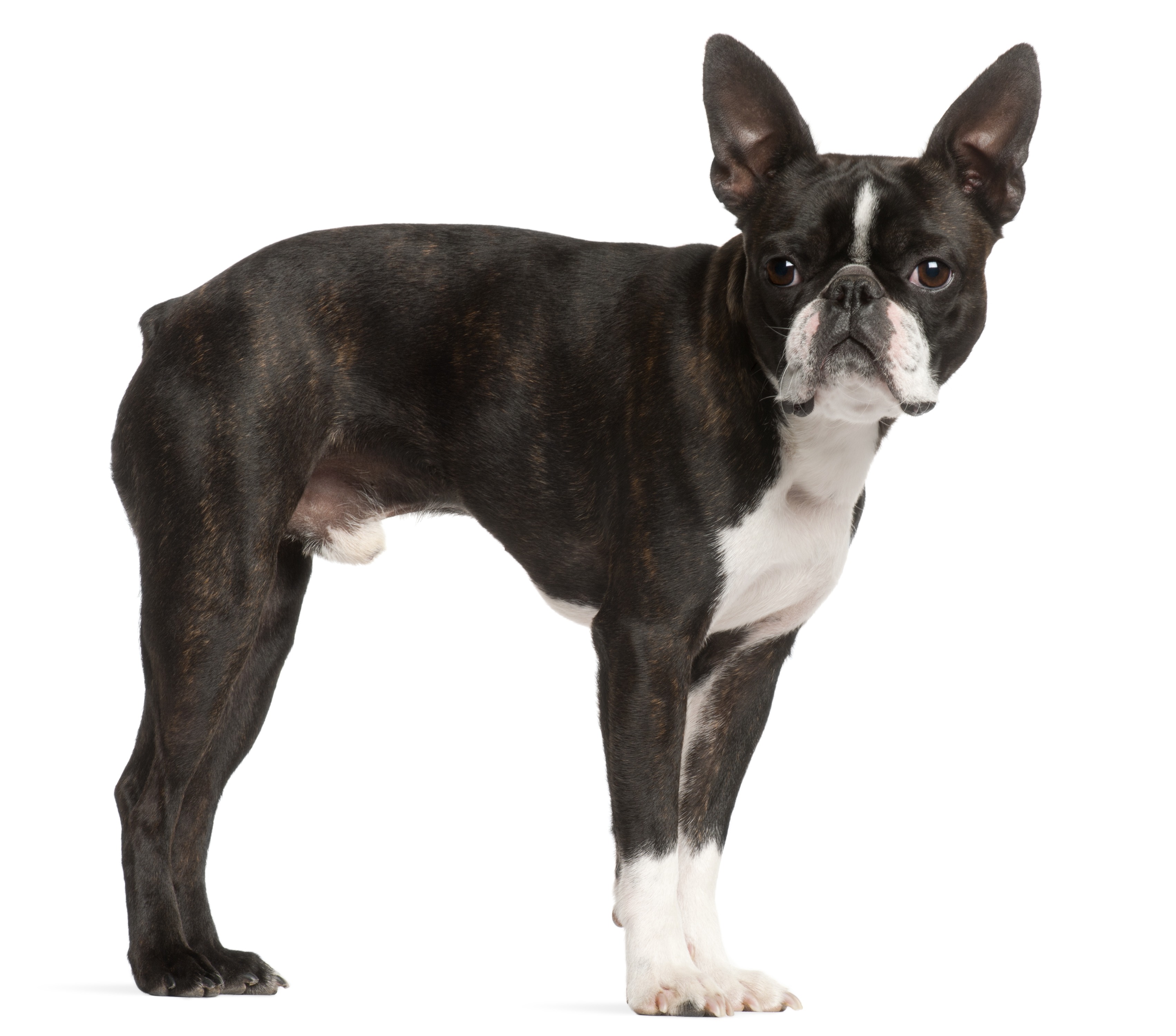
Boston Terrier.
Picture: iStock
3. Problems/syndromes that may occur in the breed
Of several problems and possible diseases that occur in this breed, only the most important defects typical of the breed are listed here.
The following breed-typical defects or common problems/health disorders and dispositions* are known in Boston Terriers:
* please also refer to the existing information sheets on individual defects such as brachycephaly, tail or Robinow-like syndrome in particular.
- Robinow-like syndrome
- Brachycephaly
- BOAS (brachycephalic obstructive airway syndrome incl. tracheal hypoplasia)
- Birthing difficulties (dystocia), high caesarean section rate
- Skin diseases
- Spinal defects (hemivertebrae, butterfly vertebrae, corkscrew spine)
- Eye diseases
- Neoplastic diseases
- Cleft lip/palate
4. Other problems that may occur frequently
In addition to the breed-specific defects listed under point 3, the veterinary literature contains references to the occurrence of the following problems, which are not discussed in further detail below, as no definitive conclusions can yet be drawn from the prevalence data available to date, and breeders, breeding clubs, and associations have not provided prevalence data collected in accordance with scientific standards. However, the following statement applies to these cases: “The absence of evidence is not evidence of absence.”
- Atresia of the Anus
- Calcinosis circumscripta
- Chemodectomas (Neuroendocrine Tumors)
- Demodicosis
- Elbow Dysplasia
- Color Dilution Alopecia
- Follicular alopecia
- Gallbladder carcinoma (endocrine)
- Limb-girdle muscular dystrophy (LGMD)
- Heart disease
- Hip dysplasia
- Hydrocephalus
- Hypospadias
- Lymphomas (T-cell lymphoma)
- Mastocytoma
- Otitis media
- Paraganglioma
- Parakeratotic hyperkeratosis
- Patellar luxation
- Perineal hernia
- Progressive retinal atrophy
- Pyloric stenosis
- Pattern alopecia (or pattern baldness)
- Hearing loss/deafness due to white spotting of the head
- Uveal cysts
5. Clinical signs and pathological value of the typical defects mentioned above: Significance/impact on the physical/psychological well-being of the defect in the individual animal and classification in burden category*
*The individual breeding-related defects are assigned to different burden categories (BC) depending on their severity. The overall burden category is based on the most severe defect found in the individual animal. The BC system as a further development based on the Swiss model is still being developed and is only intended as a guide. For this reason, the BC values used here should be regarded as provisional. This is primarily due to the fact that the German Animal Welfare Act does not contain a justiciable basis for classification into burden categories. In contrast to Switzerland, the legal standards in Germany do not quantify pain, suffering or harm or assess their quality, but take them into account if they affect the animal more than insignificantly.
However, the burden categories can also be used to assess suitability for breeding and showing.
The burdens that may result from defective breeding traits are divided into four categories (Art. 3 TSchZV, Switzerland). The overall assessment of an animal’s suitability for breeding is determined by the category of the trait or symptom that causes the animal the greatest burden (Art. 4 TSchZV, Switzerland).
Category 0 (no burden): These animals may be used for breeding.
Category 1 (mild burden): Mild burden is present if a burdenful expression of characteristics and symptoms in pets and farm animals can be compensated for by appropriate care, husbandry or feeding, without interventions on the animal and without regular medical care measures.
Category 2 (medium burden): These animals may only be used for breeding if the breeding objective* is for the offspring to be less burdened than the parents.
Category 3 (severe burden): These animals may not be used for breeding.
*However, for an assessment in the guidelines, it is assumed that a breeding goal can actually be achieved through appropriate breeding programs without breeding-related defects being expected in the intermediate generations that could cause suffering, pain, or harm (see also the expert opinion by Prof. Cirsovius).
Preliminary note regarding breeding-related defects that may be observed in this breed: Breeding and dog shows are now international in scope. Since breeders, breeding clubs, and associations have not provided reliable prevalence data on defective traits, the available international scientific literature is evaluated.
Robinow-like syndrome
(see also fact sheet no. 24 Dog Robinow-Like Syndrome) https://qualzucht-datenbank.eu/merkblatt-hund-robinow-like-syndrom/)
Physical:
The syndrome is associated with shortened limbs and various anomalies. Particularly noticeable are malformations of the skull and vertebral bodies. The skull is very broad and the face is flattened. This is associated with a particularly short hard palate and a shortened skull base with a regular size of the soft palate, which results in a disproportion of the soft tissue structures within the skull. Vertebral deformities such as block vertebrae, dorso-lateral hemivertebrae, lateral hemivertebrae, butterfly vertebrae, wedge vertebrae, transitional vertebrae, spondylosis and abnormally shortened vertebrae are associated with this syndrome. Malformed, fused or missing caudal vertebrae can lead to a shortened or so-called corkscrew tail. Anatomical malformations in various organs often lead to restrictions in various bodily functions such as breathing, thermoregulation, defecation, reproduction (mating, birth), movement, neurological disorders and impaired vision and hearing (due to otitis media).
Psychological:
Facial wrinkles, severely shortened muzzle and a functionally restricted to non-functional tail are to be assessed as physical damage and are considered as suffering due to a restriction of intra-species communication: See also Fact Sheet No. 5 Dog Tail), No. 23 French Bulldog and No. 8 Brachycephaly.
Furthermore, affected animals experience pain and suffering, e.g. in the case of intervertebral disc damage due to the consequences of anatomical deformities and severe anxiety, e.g. in the case of Brachycephalic Obstructive Airway Syndrome (BOAS). Breathlessness leading to anxiety is classified as a severe condition. This state of anxiety is exacerbated by sleep disturbances or even insomnia caused by breathlessness.
Burden category: 3 with pure genotype
Brachycephaly
(see also fact sheet no. 8 Dog Brachycephaly https://qualzucht-datenbank.eu/merkblatt-hund-brachycephalie/)
Physical:
Brachycephaly is characterized by anatomical changes to the skull. This is rather short and round with a flat snout and short nose. The bony maxilla (upper jaw) is also shortened. With the shortened skull, brachycephalic dogs have narrowed nasal passages and an abnormal anatomy of the pharynx, which can lead to obstruction of the upper airways (see BOAS). The shortened skull can promote skin folds in the head area, which are colonized by various pathogens such as bacteria, yeasts, etc. and lead to inflammatory changes (see Skin diseases). The flat skull favors a certain degree of exophthalmos, which in turn increases the risk of eye diseases (see there). A lack of space in the mouth due to the shortening of the skull leads to frequent oligodontia, malocclusion and other impairments/changes such as malocclusion of the teeth. The nasolacrimal duct in brachycephalic breeds is very often malformed due to the breeding-related changes to the facial skull and its course is deviating. It is often considerably reduced in length and can have a steep slope. The drainage path of the lacrimal fluid may be altered. This leads to a partial or complete obstruction of the canal, so that tear fluid drains outwards (via the eyes). An indication of this defect is a „tear duct“ with brownish discoloration of the coat, which often leads to dermatitis if it runs in a fold at the same time.
Psychological:
Many behaviors and areas of the animal’s life are negatively affected by brachycephaly and the resulting diseases. Respiratory distress may occur during feed intake. Affected animals usually need a longer recovery phase after short periods of activity. Playing with conspecifics may be restricted. Overall, it can therefore be assumed that the quality of life is significantly reduced. The altered anatomy of the skull also leads to changes in the musculature of the skull and the size of the eyes, so that the facial expressions and thus the communication of the animals with conspecifics is impaired. The flattened orbit associated with the skull alteration and the frequently existing macroblepharon often leads to protruding eyes, often combined with strabismus (squinting), which significantly impairs the animal’s visual acuity.
Burden category: 3
BOAS (brachycephalic obstructive airway syndrome incl. tracheal hypoplasia)
Physical:
Boston Terriers are one of the breeds most commonly affected by BOAS . Studies indicate a possible expected risk of BOAS in Boston Terriers of up to 72%.
The Breed Report for Boston Terriers from the Swedish pet insurance company AGRIA shows a 4-fold increase in relative risk for respiratory problems compared to the average of other dog breeds insured there for the period from 2011 to 2016, and an approximately 2.5-fold increase for the period from 2016 to 2021.
A recent study involving 906 dogs from 14 brachycephalic breeds, based on a modified Cambridge test (Respiratory Function Grading Scheme, RFGS), showed that BOAS is common not only in pugs and French and English bulldogs but also in other brachycephalic breeds. Signs of BOAS were also frequently observed in breeds such as the Brussels Griffon, Boston Terrier, King Charles Spaniel, Dogue de Bordeaux, and Shih Tzu. Based on these results, the Cambridge test—originally developed for pugs, French Bulldogs, and English Bulldogs—was expanded to include the Boston Terrier and other brachycephalic breeds.
According to testing statistics from the Orthopedic Foundation for Animals (OFA), between 2024 and mid-2026, between 6 and 22% of Boston Terriers examined showed abnormal values on the Respiratory Function Grading Scheme (RFGS).
Morphologically, BOAS is characterized by primary anatomical airway anomalies. Characteristic primary changes include stenotic nares as well as thickening and elongation of the soft palate. This elongation of the soft palate sometimes causes the excess tissue to obstruct the epiglottis, thereby restricting inspiration. The mucosa of the turbinates becomes hypertrophied, further impeding breathing. The upper airways are narrowed by hypertrophy of the mucosa in the turbinates and at the mucosal contact points, which restrict airflow and exacerbate respiratory problems. Due to deformities in the nasal, oral, and pharyngeal cavities, the animals must contend with significantly increased respiratory resistance. The negative pressure in the airways can also lead to secondary abnormalities (laryngeal collapse, edematous pharyngeal tissue). The lower respiratory tract may also be affected. Changes and collapse of the bronchi, as well as aspiration pneumonia, occur frequently in brachycephalic breeds. A study by Riecks et al. (2007) showed that up to four abnormalities can occur simultaneously in a single individual.
Thermoregulation via heat conduction through evaporation on the nasal mucosa is barely possible or only possible to a limited extent due to the anatomical changes. As a result, overheating can occur, since panting may also be severely impaired by the changes in the palate or nasopharynx.
The increased respiratory resistance can affect the heart. Changes in diastolic blood pressure in the right ventricle may occur in Boston Terriers. These changes also occur in animals that do not yet show any clinical signs of BOAS.
Typical clinical signs include stertor, stridor, snoring, nighttime restlessness, gagging, regurgitation, vomiting, and intolerance to exercise and heat—both at rest and during daily activities such as running. In addition, prolonged recovery periods are required following moderate activity. Syncope is also part of the clinical picture. Dogs typically present with clinical symptoms between the ages of 1 and 4 years.
In addition to the respiratory system, the gastrointestinal tract may also be affected, manifesting as changes in the esophagus or intestines. It is important to note the prolonged gastrointestinal transit time and the frequent occurrence of gastroesophageal reflux in BOAS or brachycephalic animals. This condition significantly impairs the well-being of affected animals. Endoscopic and histological examinations have shown that changes in the esophagus, stomach, and duodenum can be found in both animals that show no clinical gastrointestinal signs and those that clinically exhibit regurgitation and vomiting.
Tracheal hypoplasia is also frequently observed. Tracheal hypoplasia is a congenital reduction in the diameter of the trachea that extends along its entire length. In a retrospective study, Boston Terriers were frequently affected, accounting for 15% of cases. Other possible anomalies in dogs with tracheal hypoplasia included an elongated soft palate, stenotic nares, heart defects, and megaesophagus. Dyspnea was not associated with the degree of narrowing of the tracheal lumen in dogs with tracheal hypoplasia. However, it is also noted that despite clinical symptoms such as stridor, coughing, gagging, exercise intolerance, and syncope, dyspnea is not always a consequence of tracheal hypoplasia, as this condition is associated with many other anomalies that cause dyspnea. Affected dogs experience respiratory limitations and have recurrent episodes of dyspnea. The symptoms can be fatal.
Morphologically, BOAS is characterized by primary anatomical airway abnormalities. Characteristic primary changes include stenotic nostrils and thickening and elongation of the soft palate. This elongation of the soft palate leads in part to excess tissue obstructing the epiglottis and thus restricting inspiration. The mucosa of the conchae hypertrophies and further impedes breathing. The upper airways are narrowed by hypertrophy of the mucosa in the turbinate and the mucosal contact points, which restrict airflow and exacerbate breathing problems. Due to the deformations in the nasal/mouth/throat area, the animals have to fight against a much higher breathing resistance. The negative pressure in the airways can also lead to secondary abnormalities (laryngeal collapse, edematous pharyngeal tissue). The lower airways can also be affected. Changes and collapse of the bronchi as well as aspiration pneumonia occur more frequently in brachycephalic breeds. A study by Riecks et al. (2007) showed that up to four anomalies can occur simultaneously in one individual.
Thermoregulation via heat conduction through evaporation on the nasal mucosa is hardly possible or only possible to a limited extent due to the anatomical changes. This can lead to overheating, as the changes to the palate and nasopharynx can also severely impair panting.
The increased breathing resistance can have an effect on the heart. Changes in diastolic blood pressure in the right ventricle can occur in Boston Terriers. These changes also occur in animals that do not yet show clinical signs of BOAS.
Typical clinical signs include stertor, stridor, snoring, nocturnal restlessness, retching, regurgitation, vomiting, exercise and heat intolerance at rest and during daily activities such as walking. In addition, prolonged recovery phases are necessary after average activity. Syncope is also part of the clinical picture. Dogs usually present with clinical signs between 1 and 4 years of age.
In addition to respiration, the gastrointestinal tract can also be affected in the form of changes in the esophagus or intestines. The prolonged transit time of food and the frequently occurring gastro-oesophageal reflux in BOAS or brachycephalic animals must often be taken into account. This condition significantly affects the well-being of affected animals. Endoscopic and histological examinations have shown that changes in the esophagus, stomach and duodenum can be found both in animals that show no gastrointestinal clinical signs and those that show clinical signs of regurgitation and vomiting.
Tracheal hypoplasia is often also found. Tracheal hypoplasia is a congenital reduction in the diameter of the trachea that extends over the entire length of the trachea. In a retrospective study, Boston Terriers were frequently affected (15%). Other possible abnormalities in dogs with hypoplasia of the trachea were an elongated soft palate, stenotic nostrils, heart defects and megaesophagus. Dyspnea was not related to the degree of narrowing of the tracheal lumen in dogs with tracheal hypoplasia. However, it is also stated that despite the clinical signs of stridor, coughing, choking, exercise intolerance and syncope, dyspnea may not always be a consequence of tracheal hypoplasia, as it is associated with many other abnormalities causing dyspnea. Affected dogs are restricted in their breathing and have recurring phases of dyspnea. The symptoms can lead to death.
Psychological:
Physiological breathing is severely impaired, so that the animals often suffer from dyspnoea or respiratory distress. The animals suffer from chronic respiratory distress and are forced to breathe mainly through the open mouth, although the dog is actually an obligate nasal breather. Especially at high outside temperatures, the animals‘ activity is particularly restricted due to impaired thermoregulation. The movement and heat stress intolerance, which can also become a danger in the event of any excitement, whether positive or negative, massively restricts the dogs in their species-typical behavior and makes them more susceptible to burden. In advanced cases, it may be necessary to operate on the affected dogs to make breathing easier. Affected dogs suffer from sleep apnea, restless sleep and changes in sleep behavior, such as adopting an upright sleeping position or sleeping with an object in their mouth to prevent airway obstruction. When sleep is impaired, animals do not get enough rest. The various negative aspects of impaired breathing, sleeping behavior and activity as well as gastroenterological symptoms have a negative impact on the animals‘ well-being. A species-appropriate life and the exercise of species-specific behavior is hardly possible for the affected dogs.
Burden category: 3
Birth difficulties (dystocia)
Physical:
Data from the Swedish pet health insurance company AGRIA show that, between 2016 and 2021, Boston Terriers exhibited a significantly higher incidence of dystocia compared to other dog breeds. The risk of giving birth via cesarean section was approximately three times higher than the average for the other breeds insured by AGRIA. In a study from the United Kingdom, Boston Terriers showed an increased risk of dystocia with a prevalence of 18.8%; the mortality rate of puppies and dams due to dystocia must also be taken into account, and they rank among the 10 breeds with the highest cesarean section rates. A Swedish study showed that the main cause of obstructive dystocia in Boston Terriers is a combination of dorsoventral flattening of the pelvic canal and large fetuses with large heads. The puppies’ birth weight relative to that of the mother also appears to be relevant to the course of labor: when the mean birth weight of the puppies was 2.5% of the mother’s weight, the births proceeded without complications. Puppies whose body weight was approximately 3% of the mother’s weight resulted in obstructive dystocia. Despite the unfavorable pelvic shape and size, there appear to be differences in litter size within the breed. Particularly in brachycephalic breeds, the cesarean section rate may include elective procedures depending on the study design, and not just those resulting from dystocia.
Uterine inertia also appears to be a cause of the high cesarean section rate in Boston Terriers. Even during a natural birth, brachycephalic animals often have difficulty opening the amniotic sac and cutting the umbilical cord due to the shape of their skull and dentition, which impairs the natural birthing process, as puppies can suffocate inside the amniotic sac without human assistance.
Evidence of the high prevalence of birth-related complications in Boston Terriers can also be found in the terms and conditions of pet health insurance policies. For example, the German pet health insurer AGRIA explicitly excludes reimbursement for cesarean sections in Boston Terriers.
Psychological:
It must be assumed that approx. one fifth of Boston Terriers can only be born by means of surgical intervention (caesarean section). A caesarean section can influence maternal behavior. Vaginocervical stimulation appears to play an important role in maternal behavior, as it has been observed that females with C-sections may have problems developing adequate interactions with their puppies without the induction of a natural birth.
Burden category: 3
Skin diseases
Physical:
Skin fold dermatitis: Skin fold dermatitis is a major problem in brachycephalic breeds, and the Boston Terrier can also be affected by it.
The Breed Report from the Swedish pet insurance company AGRIA shows that Boston Terriers have a significantly higher risk of skin infections compared to the average of the dog breeds insured there. Between 2011 and 2016, the relative risk for this condition was approximately four times higher.
The shortened skull typically leads to skin folds around the muzzle and eyes. Dermatitis in the skin folds (intertrigo) is particularly common. Affected areas develop, among other things, erythema, hypotrichosis, alopecia, and ulcerations] . A specific form is tail fold intertrigo in breeds with shortened or stunted tails (“screw tail”). This condition usually requires surgical treatment involving the removal of the stunted vertebra and the surrounding skin folds.
Atopic dermatitis: Boston Terriers have a genetic predisposition to atopy, a hypersensitivity to allergens in the environment and in their diet. Symptoms may initially be seasonal but increasingly occur year-round and manifest as chronic itching, which can lead to secondary lesions and skin infections. Commonly affected areas include the ventral parts of the body, such as the armpits, groin, and interdigital spaces, as well as the muzzle, the area around the eyes, and the ears.
Data from AGRIA show that Boston Terriers have a significantly higher risk of atopy compared to the average of the dog breeds insured there. Between 2011 and 2021, the relative risk for the condition was approximately four times higher.
Psychological:
Skin diseases can become chronic and difficult to treat. They can cause pain and itching, lead to behavioral changes in the animals and thus have a negative impact on their quality of life. In the case of skin fold dermatitis, surgery may be necessary to remove the fold. If this is not an option, the animals must be treated for the rest of their lives.
Burden category: 2-3
Vertebral body malformations and tail deformation (see also information sheet no. 5 dog tail)
Physical:
Typically, a shortened and, in some cases, corkscrew-like twisted tail (“screw tail”) occurs, resulting from malformations and fusions of the vertebral bodies. This is often accompanied by other spinal deformities. These malformations can lead to abnormal curvatures of the spine, such as kyphosis, lordosis, or scoliosis. The vertebral malformations can cause narrowing of the central canal, which may compress the spinal cord and lead to neurological impairments. These include pain, various forms of paresis and plegia, as well as muscle atrophy and fecal and/or urinary incontinence. Dogs with a corkscrew tail may sometimes be unable to sit normally and therefore frequently change positions. Inflammation of the skin around the tail and perineum, accompanied by ulcerations and an unpleasant odor, is frequently observed (see Skin Diseases). Spinal malformations are associated with an increased risk of other conditions, such as intervertebral disc problems, especially when the vertebral body malformations result in kyphosis.
Congenital malformations of the thoracic vertebrae are frequently observed in Boston Terriers. The most common abnormalities are wedge-shaped vertebrae, but shortened vertebrae, butterfly vertebrae, hemivertebrae, block vertebrae, and wedge-shaped vertebrae may also occur. However, affected dogs do not always exhibit neurological signs.
According to testing statistics from the Orthopedic Foundation for Animals (OFA), between 5% and 6% of Boston Terriers examined between 2021 and 2025 exhibited myelopathy.
Psychological:
Depending on the degree of severity, disc disease and deformities of the spine can be accompanied by pain and neurological deficits and paralysis, which can significantly impair well-being and quality of life. Affected dogs with corkscrew tail may exhibit restricted sitting behavior, chasing their tail or excessive licking or rubbing of the perineum as indicators of itching and associated skin fold dermatitis. A corkscrew tail or a tail that is missing all but a few limbs can hardly or no longer be used as a means of expressing the natural and species-appropriate behavioral repertoire. Restrictions to the behavioural repertoire are recognized as suffering, also because in this case it massively restricts communication with conspecifics.
Burden category: 2-3 depending on defect
Eye disorders
Physical:
Brachycephalic breeds such as the Boston Terrier exhibit anatomical skull abnormalities that are responsible for various eye diseases and are collectively referred to as brachycephalic eye syndrome (BOS). Excessive selective breeding pressure leads to extreme skull shapes and can jeopardize the dogs’ vision. In a comparison of various brachycephalic breeds, Boston Terriers accounted for 16.6% of dogs with ophthalmic conditions such as cataracts, glaucoma, corneal ulcers, and uveitis.
Cataracts: With a prevalence of approximately 11%, Boston Terriers have an increased risk of developing cataracts.
Glaucoma: In an American study, the prevalence of primary glaucoma (intraocular pressure >30 mmHg) in this breed was up to 2.88%. Particularly following cataract surgery, 50% of Boston Terriers developed glaucoma in at least one eye. Clinically, glaucoma manifests as mydriasis, corneal edema, buphthalmos (enlarged eye), retinal hyperreflexivity, ocular pain, and reduced or complete loss of vision, among other symptoms.
Middle-aged dogs usually develop secondary glaucoma. Causes can include anterior uveitis, lens luxation, intraocular tumors, hyphema, or cataracts. Boston Terriers are also overrepresented among cases of secondary glaucoma.
Lens luxation: Boston Terriers are at increased risk of developing both primary and secondary lens luxations. The two most common causes of secondary lens luxations are glaucoma (58%) and cataracts (19%).
Ulcerative keratitis: Boston Terriers account for 9% of dog breeds affected by ulcerative keratitis. The predisposing factor for corneal ulcers appears to be brachycephaly. 81% of the ulcerated cases examined exhibited this characteristic.
Endothelial corneal dystrophy: Endothelial corneal dystrophy is believed to have a hereditary component, and Boston Terriers are also affected by it. It most commonly affects middle-aged to older dogs. Clinically, the disease can manifest as corneal edema and eyelid spasm (blepharospasm).
Cherry eye: In a genotyping study, the Boston Terrier was among the breeds most affected by cherry eye, with a prevalence of 4.09%.
Distichiasis: Approximately 3% of Boston Terriers examined between 2021 and 2025 exhibited distichiasis.
Data from the Swedish pet health insurance company AGRIA show that, between 2011 and 2021, Boston Terriers had a 4- to 6-fold higher relative risk of eye diseases such as glaucoma, corneal ulcers, and infections compared to other dog breeds. The risk of cataracts was more than 15 times higher from 2016 to 2021 compared to the average for the other breeds insured by AGRIA. For trauma to the eyeball and cornea, the Breed Report indicates an approximately 3.5-fold increased relative risk for this period.
Psychological:
In addition to a potential loss of vision, dogs affected by glaucoma suffer above all from corresponding pain in the eye. After necessary cataract surgery, Boston Terriers are at increased risk of post-operative complications such as blindness, partly due to secondary glaucoma. Boston Terriers are one of the most common breeds in which the eye had to be removed later due to glaucoma caused by cataract surgery. Nociceptive afferent nerve cells innervate the cornea, so it can be assumed that ulcerative corneal changes can cause considerable pain and impair vision. Impaired or absent vision severely restricts the animals in their species-typical behavior and well-being.
Burden category: 2-3 depending on defect
Neoplastic diseases
Physical:
The age at diagnosis of various tumor diseases is lower in Boston Terriers compared to mixed-breed dogs, so a genetic component is assumed.
Primary brain tumors (gliomas): Increased incidence in Boston Terriers. These are mostly oligodendrogliomas and astrocytomas.
Neutering-related tumors: A significant increase in cancers was found in male Boston Terriers neutered within the first 11 months of life. While 5% of intact males were diagnosed with one or more cancers, 10% of males neutered at < 6 months of age and 12% of males neutered at 6 to 11 months of age were diagnosed with cancer. The tumor types investigated, which according to studies can be influenced by castration, are lymphomas/lymphosarcomas, hemangiosarcomas, mast cell tumors and osteosarcomas.
Mammary tumors: Boston Terriers are one of the dog breeds in which mammary tumors occur more frequently.
Pituitary tumors: Hyperadrenocorticism or neurological symptoms such as changes in the state of consciousness, inappetence, lethargy, behavioral changes, seizures and deficits of the cranial nerves may occur.
Psychological:
Depending on the type of tumor, location and stage, the affected dogs may suffer from corresponding symptoms or even die or have to be euthanized.
Burden category: 3
Cleft lip/palate
Physical:
In a comparison of different dog breeds, Boston Terriers show an increased risk of orofacial clefts, such as cleft lip and cleft palate. Other congenital defects often occur at the same time. Pankowski et al. (2018) point out the risk that puppies with severe clefts may not be able to suckle or take in enough milk. In addition, nasopharyngeal and middle ear infections and aspiration pneumonia can occur. The main abnormalities observed are sneezing and problems with milk intake.
There is an increased risk of the puppies not taking in enough food, so supplementary feeding is necessary. Current feeding methods carry the risk of aspiration pneumonia, so special procedures should be used. As a rule, these clefts must be surgically corrected.
Psychological:
Affected puppies suffer from malnutrition and possible aspiration pneumonia. Due to the special care required and possible life-threatening complications at any time, puppies with cleft lips and palates are cared for and housed individually until surgery is possible. Early separation from the mother and littermates may result in psychological stress for the puppies and behavioral disorders are possible.
Burden category: 3
In the Boston Terrier, the breed-related (standard-related) initial values already result in the overall category 3.
Animal Welfare Assessment of the Problem of Cruel Breeding Practices in the Boston Terrier
Based on the facts cited in QUEN Fact Sheet No. 31, which list the probability of a range of breeding-related defects in stress categories 2–3 (moderate to severe stress) or 3 (severe stress), it must be concluded from an animal ethics perspective that continued breeding with affected animals of this breed must be classified as highly problematic, since a breeder must expect that the animals brought into the world through their breeding efforts will endure significant and persistent pain or suffering. This is unacceptable even if at least one of the breeding-related defects listed in the fact sheet falls into severity categories 2–3 in at least one of the animals they have bred, whereby “predictable” refers to hereditary changes in the offspring even if it is uncertain whether they will occur only after a generational gap in later generations.
6. Heredity, genetics, known gene tests, if applicable, average coefficient of inbreeding (COI), if applicable, Generic Illness Severity Index
Robinow-like syndrome (see leaflet no. 24 Robinow-like syndrome)
There is an autosomal recessive inheritance with variable penetrance . A genetic variant of the DVL2 gene has been identified that is fixed in Bulldogs, French Bulldogs and Boston Terriers and is associated with the breed-typical phenotype. This variant correlates with thoracic and tail vertebrae malformations and, together with the already known variants in the SMCO2 and BMP3 genes, contributes to the brachycephalic phenotype. The variant appears to follow a recessive pattern of inheritance, showing incomplete penetrance with regard to thoracic vertebral malformations, which differs from breed to breed. With regard to the caudal vertebrae malformations, the Boston Terrier has complete penetrance, i.e. the defect is always formed if the genotype is present. The consequence of incomplete penetrance is that the expression of the trait following the genotype does not necessarily take place. Accordingly, it is virtually impossible for a breeder to plan matings where „breeding knowledge suggests“ that the resulting young animals will not be affected, as even the mating of clinically healthy animals makes the consequences for the offspring unforeseeable. Due to the genetic fixation in the population, all animals carry the mutated variant of the DVL2 gene. Indications that the DVL2 variant could also be linked to other health problems such as brachycephalic obstructive airway syndrome (BOAS) or congenital heart defects are still the subject of current research.
Genetic test: A genetic test for the DVL2 gene is available.
Brachycephaly
Genetics and inheritance are not fully understood. Due to the genetic complexity, it is assumed that various chromosomes have an influence. It is assumed that the TCOF1 gene is involved in the development of brachycephaly. This assumption could not be confirmed. Several studies found correlations with CFA 1-(synonym for chromosome 1 of the dog) on which loci associated with brachycephaly are located. The involvement of SMOC2, BMP3, FGFR-2, THBS1 and DVL2 genes has also been discussed.
Other genetic tests available for the Boston Terrier breed:
Chondrodysplasia and dystrophy
Degenerative myelopathy (DM) exon 2
Hereditary cataract (HSF4)
Hyperuricosuria
Malignant hyperthermia
Progressive retinal atrophy
7. Diagnosis – further examinations
Robinow-like syndrome
Suspected diagnosis based on breed affiliation/pathognomonic phenotype; confirmation by genetic testing if necessary. If the DVL2 variant is detected in the homozygous or heterozygous state, there is no need for further X-ray or CT examinations in otherwise symptom-free (not trait-free) dogs, as these animals may not be exhibited or bred with anyway.
French Bulldogs have a broad head, a short muzzle, widely spaced eyes and anomalies of the vertebral bones and tail. They have shortened and possibly kinked tails („screw-tail“) as an easily recognizable feature.
In this respect, the appearance of the animals due to the visible damage already justifies the show ban and additionally the suspicion of the presence of Robinow-like syndrome, which can be verified by a genetic test.
Brachycephaly
In borderline cases, the expression of the trait can only be partially diagnosed by external observation and examination, unless clear, externally visible defects already allow sufficient assessment. Further specialist veterinary examinations, imaging procedures to examine the head and, in some animals, the skeletal system, verify the diagnosis, complete the overall picture and may be necessary to provide the animal with any necessary medical treatment. Endoscopy can be used to detect stenoses, constrictions in the nasal vestibule, excess length and thickening of the soft palate, changes in the trachea and excessive tissue in the nasopharynx/muzzle. In addition to the changes in the shape of the head, nostrils and jaw that can already be determined by inspection, X-rays and/or a multidimensional imaging procedure (skull CT) provide clarity about possible further defects. Methods for measuring the skull are also possible.
BOAS (brachycephalic obstructive airway obstruction syndrome, possibly including tracheal hypoplasia)
In stable patients, lung function should be assessed using auscultation, pulse oximetry, and blood gas analysis. Pneumonia and pulmonary edema can be diagnosed via X-ray. An endoscopic examination is suitable for evaluating the structures in the oral cavity (including the palate and larynx) and the trachea. X-rays can be taken to detect tracheal hypoplasia. High-resolution imaging techniques, such as a CT scan, are necessary for a precise morphological examination.
To objectively assess the severity of BOAS, a stress test—such as the Cambridge Test (Respiratory Function Grading Scheme, RFGS)—can be performed. However, the results of such tests are by no means sufficient for evaluating breeding suitability, as brachycephalic dogs often exhibit other breed-related malformations and predispositions, and BOAS can progress over the course of a dog’s life.
Birth difficulties (dystocia)
During the anamnesis (including family anamnesis) with clinical examination and questioning about the pregnancy and birth process, attention should be paid to certain findings, such as pelvic fractures, duration of pregnancy, body temperature and time between birth of the puppies. A digital vaginal examination should be performed. X-rays provide information about the number and position of the puppies. Bony changes in the pelvis that could promote dystocia can be analyzed by radiographic examination.
Skin diseases
Corresponding changes, lesions, etc. are examined and, if necessary, samples such as skin scrapings, cytology and/or biopsies are taken. A comprehensive dermatological examination may be necessary. A family history of atopy should be taken into account.
Vertebral body malformations and tail deformation
A „screw tail“ cannot always be diagnosed immediately and may be an incidental finding. In addition to the clinical examination, the history should include whether the dog is reluctant to be touched above the base of the tail and whether mobility is restricted. A detailed examination of the tail is not always possible without sedation or anesthesia due to pain. A neurological examination can help to rule out neurological differential diagnoses. If there are changes to the skin, these should be examined further dermatologically. Imaging procedures such as X-rays help to assess the bony changes more precisely. Imaging procedures such as X-rays, CT and MRI are also suitable for assessing the spine.
Eye diseases
A complete ophthalmologic examination, including Schirmer tear test, tonometry, slit lamp examination and gonioscopy, depending on the suspected diagnosis, is used for diagnosis.
Neoplastic diseases
Depending on the suspected diagnosis, an ultrasound examination can be carried out and biopsies taken, for example. So-called liquid biopsies are now also possible in order to carry out non-invasive examinations. If a pituitary tumor with hyperadrenocorticism is suspected, in addition to a clinical examination and medical history, a screening is carried out and a low-dose dexamethasone test, ACTH determination and/or urine corticosteroid/creatinine ratio is performed or determined.
Cleft lip/palate
A clinical examination including an adspection is carried out. The anatomical structures can be assessed in more detail using imaging procedures such as a CT scan.
8. Necessary or possible orders from an animal welfare perspective
Decisions on breeding or exhibition bans should be made in connection with the burden category (BC). Depending on the severity and findings, the decisive factor for a breeding ban may be the most severe finding, i.e. the one that affects the animal the most, and its classification in one of the burden categories (BC), or also the assessment of the correlation if there are many individual breeding-related defects. The individual inbreeding coefficient of an animal and its status as a carrier of risk genes should also be taken into account.
a) orders that appear necessary
Breeding ban according to §11b TierSchG for animals with hereditary/breeding-related defects, in particular
- with changes to the skeletal system: head, spine, hips, pelvis, elbows
- with brachycephalic obstructive airway syndrome (BOAS)
- with extremely shortened upper jaw, malocclusion of the teeth (especially visible teeth with closed mouth) or malocclusion, especially absence of several molars
- with missing, non-functional, severely shortened, crippled tail („screw-tail“)
Exhibition ban according to §10 TierSchHuV
- already with visibly shortened/crippled tail
- brachycephaly with a nasal length of less than 33% of the total head length
b) possible orders
- Order for permanent infertility (sterilization/castration) in accordance with 11b (2)
- Determination of the individual COI of the breeding partners
Please note:
Measures taken by the competent authority must be recognizably suitable for averting future harm to the animal concerned and/or its offspring. With regard to the type and depth of processing of orders and breeding bans, decisions are always made on a case-by-case basis at the discretion of the competent authority, taking into account the current legal standards and the circumstances found on site.
9. General assessment of animal welfare law
a) Germany
From a legal point of view, dogs with the defects/syndromes described above are classified as torture breeding in Germany in accordance with §11b TierSchG.
Justification:
According to §11b TierSchG, it is prohibited to breed vertebrate animals if breeding knowledge indicates that, as a result of breeding, the offspring or progeny will, among other things
- body parts or organs are missing for species-appropriate use due to hereditary reasons or are unsuitable or deformed, resulting in pain, suffering or damage (§ 11b Para. 1 No. 1 TierSchG) or
- hereditary behavioral disorders associated with suffering occur (§ 11b para. 1 no. 2 a) TierSchG) or
- the keeping is only possible with pain or avoidable suffering or leads to damage (§ 11b Para. 1 No. 2 c) TierSchG).
Pain is defined in animals as an unpleasant sensory perception caused by actual or potential injury, which triggers motor or vegetative reactions, results in learned avoidance behavior and can change the potentially specific behaviors ((Hirt/Maisack/Moritz/Felde, TierSchG, Kommentar 4th ed. 2023 § 1 para. 12 mwN; basically also Lorz/Metzger TierSchG 7th ed. § 1 para. 20).
Suffering is any impairment of well-being not already covered by the concept of pain that goes beyond simple discomfort and lasts for a not insignificant period of time (Hirt/Maisack/Moritz/Felde Tierschutzgesetz Kommentar 4th ed. 2023 § 1 para. 19 mwN; Lorz/Metzger, TierSchG Komm. 7th ed. 2019 § 1 para. 33 mwN). Suffering can also be physically and mentally debilitating; fear in particular is classified as suffering in the commentary and case law (Hirt/Maisack/Moritz/Felde Section 1 TierSchG para. 24 mwN; Lorz/Metzger Section 1 TierSchG para. 37).
Damage occurs when the physical or mental condition of an animal is temporarily or permanently altered for the worse (Hirt/Maisack/Moriz/Felde TierSchG Komm. 4th ed. 2023 § 1 para. 27 mwN; Lorz/Metzger TierSchG Komm. 7th ed. 2019 § 1 para. 52 mwN), whereby completely minor impairments based on a physical or psychological basis are not taken into account. „The target condition of the animal is assessed on animals of the same species. The absence of body parts is regularly assessed as damage in the commentary literature“ (VG Hamburg decision of 4.4.2018, 11 E 1067/18 para. 47, also Lorz/Metzger TierSchG Komm. § 1 para. 52).
The breeding of Boston Terriers constitutes torturous breeding due to the single or multiple damages, pain and suffering described in detail in section 5:
- Damage to the spine and associated pain
- Eye diseases and associated pain and damage
- Skin diseases and associated pain and suffering
- Inability to bear offspring naturally
- Impairment of thermoregulation and associated suffering
- Anxiety caused by shortness of breath
- Suffering due to limited ability to communicate
- Fulfillment of the concept of suffering due to physical changes brought about by breeding measures, which leads to a not insignificant impairment of the species-specific behavioral processes and possibly non-resilience of the animals. Species-appropriate husbandry is therefore not possible.
– The prohibition applies regardless of the subjective facts, i.e. regardless of whether the breeder himself recognized or should have recognized the possibility of harmful consequences. Because of this objective standard of care, the breeder cannot invoke a lack of subjective knowledge or experience if the respective knowledge and experience can be expected from a careful breeder of the respective animal species. (see Hirt/Maisack/Moritz, Tierschutzgesetz, Kommentar 4th ed. 2023, § 11b TierSchG para. 6).
– Hereditary changes in the offspring are also foreseeable if it is uncertain whether they will only occur after a generation jump in later generations (cf. Goetschel in Kluge § 11b para. 14). It should be noted that a breeding ban does not only apply if animals are bred that themselves exhibit traits relevant to cruelty (trait carriers), but also if it is known or must be known that an animal used for breeding can pass on traits that can lead to one of the adverse changes in the offspring (carriers; in particular animals that have already produced damaged offspring; (Lorz/Metzger, Kommentar zum TierSchG § 11b para. 6 with further evidence).
– An important indication of a hereditary defect is that a disease or behavioral deviation occurs more frequently in related animals than in the overall population of the dog species. The fact that the breed or population has proven to be viable over a longer period of time does not speak against damage (see Lorz/Metzger Kommentar zum TierSchG § 11b Rn. 9). Even habituation to damage or compensation, such as extra short walks, does not change the existence of damage (see Hirt, A., Ch. Maisack, J. Moritz and B. Felde (2023): Tierschutzgesetz (TierSchG), 4th edition, Verlag Franz Vahlen, § 1 TierSchG Rn27).
– The assessment standard for breeding-related changes is a normal animal of the same species (not breed), if breeding and selection result in changes to the animal that negatively alter its species-specific behavioral expressions or physiological body functions.
b) Austria
Dogs with the defects/syndromes described above are classified as torture breeding in Austria according to §5 TSchG
In particular*, it is a violation of § 5 of the Austrian Animal Welfare Act to „carry out breeding which is foreseeable to cause pain, suffering, harm or fear to the animal or its offspring (torture breeding), so that as a result of genetic abnormalities, in particular one or more of the following clinical symptoms occur in the offspring not only temporarily with significant effects on their health or significantly impair physiological life courses or cause an increased risk of injury“.
*The word „in particular“ means that the list is not exhaustive, but exemplary.
This means that traits and symptoms other than those listed in §5, if they lead to breeding-related changes that may be associated with pain, suffering or damage, are also considered to be torture breeding traits.
Breeding with dogs that suffer from the following defects and the associated problems or are genetically predisposed to them is to be qualified as torture breeding, as the following symptoms listed in § 5 are realized: Shortening of the facial skull (e.g. respiratory distress, malformation of the teeth), pathological changes of the eyes (inflammation of the cornea, blindness), vertebral body malformations and shortened tail (movement anomalies), skin fold dermatitis (inflammation of the skin), severe births / cesarean sections.
The breeding of Boston Terriers already qualifies as torture breeding due to the fact that „it must be assumed with a high degree of probability that natural births are not possible“ (Österreich. TSchG, 2022).
c) Switzerland
Anyone wishing to breed with an animal that exhibits a trait or symptom that may lead to moderate or severe stress in connection with the breeding objective must first have a burden assessment carried out. Only hereditary burdens are taken into account in the burden assessment (see Art. 5 of the FSVO Ordinance on Animal Welfare in Breeding (TSchZV)). Dogs with defects that can be assigned to burden category 3 are subject to a breeding ban in accordance with Art. 9 „TSchZV“. It is also prohibited to breed with animals if the breeding objective results in category 3 defects in the offspring. Animals in category 2 may be bred if the breeding objective is for the offspring to be less affected than the parents (Art. 6 TSchZV). Annex 2 of the TSchZV lists characteristics and symptoms that can lead to moderate or severe burden in connection with the breeding objective. Degenerative joint changes, skull deformities with impeding effects on the ability to breathe and the birth process, excessive wrinkling, herniated discs, eye malfunctions and cataracts are expressly mentioned. In addition, individual breeding forms are expressly prohibited in accordance with Art. 10 TSchVZ. In other cases, however, a breeding ban is only imposed on a case-by-case basis. Animals that have been bred on the basis of impermissible breeding objectives may not be exhibited (Art. 30a para. 4 let. b TSchV).
d) The Netherlands
In the Netherlands, therefore, pursuant to Article 3.4. “Breeding of Domestic Animals” of the Animal Owner Decree and Article 2, Sentence 1, of the Decree on “Breeding of Brachycephalic Dogs,” it is prohibited to breed dogs whose muzzle is shorter than one-third of the skull length and that exhibit any of the following related problems: producing a wheezing sound when breathing at rest; exhibit moderate to severe narrowing of the nostrils; a nasal fold with hair that touches or could touch the cornea or conjunctiva from the nasal fold, or that is wet; signs of inflammation in one or both eyes related to the presence of the nasal fold; an eye with visible white sclera in two or more quadrants; an eyelid that cannot be fully closed when the eyelid reflex is triggered.
In the Netherlands, for breeding with short-snouted dogs, the results of a PET scan must be submitted confirming that 1. no abnormal sounds are audible during breathing at rest, 2. the nostrils are sufficiently large, 3. a craniofacial ratio of at least 0.3 is present, 4. there is no nasal fold, 5. the white part of the eyes is only partially visible, and 6. the eyes can be closed completely.
Detailed legal assessments and/or expert opinions, if already available, can be made available to veterinary offices for official use on request.
10. Relevant jurisdiction
1.Germany: Not known.
2.Austria: Not known.
3.Switzerland: Not known.
4. Netherlands: Amsterdam Court, June 4th 2025, rule: issuing of pedigrees to brachycephalic dogs is illegal
5. Sweden: Not known.
6. Norway: Not known.
11. Order example available?
Not yet for Boston Terriers, but for several other brachycephalic breeds (see French Bulldog information sheet).
Examples of orders are only made available to veterinary offices for official use on request.
12. Grants and subsidies
13. Bibliography/ References/ Links
Only a selection of the defects described above and, if applicable, general literature on breed-related defects in dogs is given. Extensive literature lists on the scientific background will be sent exclusively to veterinary authorities on request.
Note: The description of health problems associated with the defects, for which there is not yet sufficient scientific knowledge, is made against the background of the corresponding experiences of experts from veterinary practice and/or university institutions, as well as publicly freely accessible databases or publications by animal insurances and therefore come from different evidence classes.
Since breeding and exhibitions are international these days, the information usually does not only refer to the prevalence of defects or traits in individual associations, clubs or countries.
Sources:
AGRIA Pet Insurance, Sweden. (2017). Boston Terrier Agria Breed Profiles Veterinary Care 2011–2016.
AGRIA Pet Insurance, Sweden. (2022). Boston Terrier Agria Breed Profiles Veterinary Care 2016–2021.
AGRIA. (2026). AGRIA Dog Insurance Terms and Conditions—C Breed-Specific Exclusions. https://www.agriatierversicherung.de/dokument/geschaftsbedingungen/agria-besondere-und-allgemeine-versicherungsbedingungen-hund
Amsterdam District Court. (2025). Judgment of June 4, 2025. German translation. https://www.inview.nl/document/idc5a2b93693dd43e9944c12082bf3b34f/rb-amsterdam-25-09-2024-nr-c-13-743592-ha-za-23-1118?ctx=WKNL_CSL_10000001&tab=tekst
Beaucamp, E.; Beaucamp, S. (2021): Erlaubnistatbestände und -verfahren in der tierschutzrechtlichen Praxis. Nach § 11 Tierschutzgesetz. 1. Auflage. Stuttgart: Verlag W. Kohlhammer (Rechtswissenschaften und Verwaltung Handbücher).
Binder, R. (2019): Das österreichische Tierschutzrecht. Tierschutzgesetz und Tierversuchsgesetz 2012 mit ausführlicher Kommentierung. 4. Auflage. Wien: Edition Juridica in der MANZ’schen Verlags- und Universitätsbuchhandlung GmbH (Juridica Praxiskommentar).
Brložnik, M., Nemec Svete, A., Erjavec, V., & Domanjko Petrič, A. (2023). Echocardiographic Parameters in French Bulldogs, Pugs, and Boston Terriers with Brachycephalic Obstructive Airway Syndrome. BMC Veterinary Research, 19(1), 49. https://doi.org/10.1186/s12917-023-03600-9
Dupré, G., & Heidenreich, D. (2016). Brachycephalic Syndrome. Veterinary Clinics of North America: Small Animal Practice, 46(4), 691–707. https://doi.org/10.1016/j.cvsm.2016.02.002
European College of Veterinary Ophthalmologists. (2021). ECVO Manual: Breeds—Boston Terrier. https://www.ecvo.eu/media/bostonterrieragcb1.pdf
Evans, K. M., & Adams, V. J. (2010). Proportion of litters of purebred dogs born by cesarean section. Journal of Small Animal Practice, 51(2), 113–118. https://doi.org/10.1111/j.1748-5827.2009.00902.x
Foote, B. C., Pederson, S. L., Welihozkiy, A., Stine, J. M., Carastro, S. M., Andrew, S. E., & Michau, T. M. (2018). Retinal detachment and glaucoma in the Boston Terrier and Shih Tzu following phacoemulsification (135 patients): 2000–2014. Veterinary Ophthalmology, 21(3), 240–248. https://doi.org/10.1111/vop.12500
Freyer, J., Labadie, J. D., Huff, J. T., Denyer, M., Forman, O. P., Chodroff Foran, R., & Donner, J. (2024). Association of FGF4L1 Retrogene Insertion with Prolapsed Nictitating Membrane (Cherry Eye) in Dogs. Genes, 15(2), 198. https://doi.org/10.3390/genes15020198
Geiger, M., Schoenebeck, J. J., Schneider, R. A., Schmidt, M. J., Fischer, M. S., & Sánchez-Villagra, M. R. (2021). Exceptional Changes in Skeletal Anatomy under Domestication: The Case of Brachycephaly. Integrative Organismal Biology, 3(1), obab023. https://doi.org/10.1093/iob/obab023
Gelatt, K. N., & MacKay, E. O. (2004). Prevalence of breed-related glaucomas in purebred dogs in North America. Veterinary Ophthalmology, 7(2), 97–111. https://doi.org/10.1111/j.1463-5224.2004.04006.x
Genetics Committee of the American College of Veterinary Ophthalmologists (ACVO). (2025). ACVO 2025—Blue Book: Ocular Disorders Presumed to Be Inherited in Purebred Dogs—Boston Terrier. https://ofa.org/wp-content/uploads/2026/06/Blue-Book-2025-17th-Edition.pdf
Gough, A.; Thomas, A.; O’Neill, D. (Hg.) (2018): Breed Predispositions to Disease in Dogs and Cats. Chichester, UK: John Wiley & Sons, Ltd.
Breed Predispositions to Disease in Dogs and Cats, 3rd Edition | Wiley
Hagen, M. A. E. van. (2019). Züchten mit kurzschnäuzigen Hunden. Übersetzung aus dem Niederländischen. https://www.uu.nl/sites/default/files/de_zuchten_mit_kurzschnauzigen_hunden_-_kriterien_zur_durchsetzing_-_ubersetzung_aus_dem_niederlandischen.pdf
Hale, F. A. (2021). Dental and Oral Health for the Brachycephalic Companion Animal . In Health and Welfare of Brachycephalic (Flat-faced) Companion Animals (1., S. 235–250). Taylor and Francis Group. https://www.taylorfrancis.com/chapters/edit/10.1201/9780429263231-14/dental-oral-health-brachycephalic-companion-animal-fraser-hale
Hart, L. A., Thigpen, A. P., Hart, B. L., Willits, N. H., Lee, M., Babchuk, M. M., Lee, J., Ho, M., Clarkson, S. T., & Chou, J. W. (2024). Assisting decision-making on age of neutering for German Short/Wirehaired Pointer, Mastiff, Newfoundland, Rhodesian Ridgeback, Siberian Husky: Associated joint disorders, cancers, and urinary incontinence. Frontiers in Veterinary Science, 11, 1322276. https://doi.org/10.3389/fvets.2024.1322276
Hobi, S., Barrs, V. R., & Bęczkowski, P. M. (2023). Dermatological Problems of Brachycephalic Dogs. Animals, 13(12), 2016. https://doi.org/10.3390/ani13122016
Keijser, S. F. A., Vernooij, J. C. M., Rothuizen, J., Fieten, H., Nielen, M., Hesselink, J. W., & Van Steenbeek, F. G. (2018). PET scan: Measuring incidence of disease phenotypes to prioritize genetic studies in companion animals. Animal Genetics, 49(5), 492–495. https://doi.org/10.1111/age.12707
Mansour, T. A., Woolard, K. D., Vernau, K. L., Ancona, D. M., Thomasy, S. M., Sebbag, L., Moore, B. A., Knipe, M. F., Seada, H. A., Cowan, T. M., Aguilar, M., Titus Brown, C., & Bannasch, D. L. (2020). Whole genome sequencing for mutation discovery in a single case of lysosomal storage disease (MPS type 1) in the dog. Scientific Reports, 10(1), 6558. https://doi.org/10.1038/s41598-020-63451-4
Martins-Bessa, A., Cardoso, L., Costa, T., Mota, R., Rocha, A., & Montenegro, L. (2018). Reproductive emergencies in the bitch: A retrospective study. Journal of the Hellenic Veterinary Medical Society, 66(4), 231. https://doi.org/10.12681/jhvms.15867
Niederländisches Ministerium für Landwirtschaft, Natur und Lebensmittelqualität. Grundsatzregelung für brachycephale Hunde (Übersetzung aus dem Niederländischen) [Internet]. 2023. https://qualzucht-datenbank.eu/wp-content/uploads/2023/09/Uebersetzung-Verbot-der-Zucht-mit-brachycephalen-Hunden-1.pdf
Niskanen, J. E., Reunanen, V., Salonen, M., Bannasch, D., Lappalainen, A. K., Lohi, H., & Hytönen, M. K. (2021). Canine DVL2 variant contributes to brachycephalic phenotype and caudal vertebral anomalies. Human Genetics, 140(11), 1535–1545. https://doi.org/10.1007/s00439-021-02261-8
O’Neill, D. G., Jackson, C., Guy, J. H., Church, D. B., McGreevy, P. D., Thomson, P. C., & Brodbelt, D. C. (2015). Epidemiological associations between brachycephaly and upper respiratory tract disorders in dogs attending veterinary practices in England. Canine Genetics and Epidemiology, 2(1), 10. https://doi.org/10.1186/s40575-015-0023-8
O’Neill, D. G., O’Sullivan, A. M., Manson, E. A., Church, D. B., Boag, A. K., McGreevy, P. D., & Brodbelt, D. C. (2017). Canine dystocia in 50 UK first‐opinion emergency‐care veterinary practices: Prevalence and risk factors. Veterinary Record, 181(4), 88–88. https://doi.org/10.1136/vr.104108
O’Neill, D. G., Pegram, C., Crocker, P., Brodbelt, D. C., Church, D. B., & Packer, R. M. A. (2020). Unravelling the health status of brachycephalic dogs in the UK using multivariable analysis. Scientific Reports, 10(1), 17251. https://doi.org/10.1038/s41598-020-73088-y
Orthopedic Foundation for Animals (OFA). (2026). Testing Statistics Boston Terrier. https://ofa.org/chic-programs/browse-by-breed/?breed=BTR
Orthopedic Foundation for Animals (OFA). (2026). Respiratory Function Grading Scheme Overview. OFA. https://ofa.org/diseases/rfgs/
Orthopedic Foundation for Animals (OFA). (2026). Breed Summary Report Boston Terrier. https://ofa.org/chic-programs/browse-by-breed/?breed=BTR
Packer, R. M. A., Hendricks, A., Tivers, M. S., & Burn, C. C. (2015). Impact of Facial Conformation on Canine Health: Brachycephalic Obstructive Airway Syndrome. PLOS ONE, 10(10), e0137496. https://doi.org/10.1371/journal.pone.0137496
Packer, R. M. A., Hendricks, A., & Burn, C. C. (2015). Impact of Facial Conformation on Canine Health: Corneal Ulceration. PLOS ONE, 10(5), e0123827. https://doi.org/10.1371/journal.pone.0123827
Packer, R. M.A., O’Neill, Dan G. (2021): Health and Welfare of Brachycephalic (Flat- faced) Companion Animals- A complete Guide for Veterinary and Animal Professionals. CRC Press. Taylor&Francis Group.
Palmer, S. V., Espinheira Gomes, F., & McArt, J. A. A. (2021). Ophthalmic disorders in a referral population of seven breeds of brachycephalic dogs: 970 cases (2008–2017). Journal of the American Veterinary Medical Association, 259(11), 1318–1324. https://doi.org/10.2460/javma.20.07.0388
Pankowski, Filip; Paśko, Sławomir; Max, Andrzej; Szal, Bartłomiej; Dzierzęcka, Małgorzata; Gruszczyńska, Joanna et al. (2018): Computed tomographic evaluation of cleft palate in one-day-old puppies. In: BMC Veterinary Research 14 (1), S. 316. https://bmcvetres.biomedcentral.com/articles/10.1186/s12917-018-1642-6
Riecks, T. W.; Birchard, S. J.; Stephens, J. A. (2007): Surgical correction of brachycephalic syndrome in dogs: 62 cases (1991-2004). In: Journal of the American Veterinary Medical Association 230 (9), S. 1324–1328. https://avmajournals.avma.org/view/journals/javma/230/9/javma.230.9.1324.xml
Sahr, S., Dietrich, A., Oechtering, G.U. (2021): Evaluating malformations of the lacrimal drainage system in brachycephalic dog breeds: A comparative computed tomography analysis. PLoS One; 16(9):e0257020 https://www.ncbi.nlm.nih.gov/pmc/articles/PMC8423249/pdf/pone.0257020.pdf.
Sebbag, L., & Sanchez, R. F. (2023). The pandemic of ocular surface disease in brachycephalic dogs: The brachycephalic ocular syndrome. Veterinary Ophthalmology, 26(S1), 31–46. https://doi.org/10.1111/vop.13054
Thomasy, S. M., Cortes, D. E., Hoehn, A. L., Calderon, A. C., Li, J. Y., & Murphy, C. J. (2016). In Vivo Imaging of Corneal Endothelial Dystrophy in Boston Terriers: A Spontaneous, Canine Model for Fuchs’ Endothelial Corneal Dystrophy. Investigative Opthalmology & Visual Science, 57(9), OCT495. https://doi.org/10.1167/iovs.15-18885
Tomlinson, F., O’Neill, E., Liu, N.-C., Sargan, D. R., & Ladlow, J. F. (2024). BOAS in the Boston Terrier: A healthier screw-tailed breed? PLOS ONE, 19(12), e0315411. https://doi.org/10.1371/journal.pone.0315411
Tomlinson, F., Liu, N.-C., Sargan, D. R., & Ladlow, J. F. (2026). A cross-sectional study into the prevalence and conformational risk factors of BOAS across fourteen brachycephalic dog breeds. PLOS One, 21(2), e0340604. https://doi.org/10.1371/journal.pone.0340604
Dieses Merkblatt wurde durch die QUEN gGmbH unter den Bedingungen der „Creative Commons – Namensnennung – Keine kommerzielle Nutzung – Weitergabe unter gleichen Bedingungen“ – Lizenz, in Version 4.0, abgekürzt „CC BY-NC-SA 4,0“, veröffentlicht. Es darf entsprechend dieser weiterverwendet werden, Eine Kopie der Lizenz ist unter https://creativecommons.org/licenses/by-nc-sa/4.0/ einsehbar. Für eine von den Bedingungen abweichende Nutzung wird die Zustimmung des Rechteinhabers benötigt.
Sie können diese Seite hier in eine PDF-Datei umwandeln:


